Bringing a new Yorkshire Terrier puppy home is an exciting time, but it often comes with the challenge of house-training. Mastering yorkie potty training tips is crucial for a harmonious household and a happy, confident pup. Due to their small size, delicate bladders, and sometimes stubborn nature, Yorkies require a specific approach that differs from larger breeds. This guide will walk you through effective, breed-specific strategies to ensure your little companion learns where and when to relieve themselves.
Understanding Your Yorkie’s Potty Training Needs
Yorkies have unique characteristics that impact their potty training journey. Their small bladders mean they need to go more frequently than larger dogs. Additionally, some Yorkies can be prone to ‘small dog syndrome,’ which, if not addressed through consistent training, can extend to potty habits, making them less inclined to go outside in inclement weather or on unfamiliar surfaces. Understanding these nuances is the first step toward successful training.
The Importance of a Consistent Schedule
Consistency is the cornerstone of effective potty training for any dog, but especially for Yorkies. Establish a strict schedule for potty breaks from day one. This should include:
- First thing in the morning.
- After every nap.
- After playing.
- After eating and drinking (usually within 15-20 minutes).
- Before bedtime.
- Every 2-3 hours throughout the day for young puppies.
Stick to these times religiously, even on weekends. Your Yorkie thrives on routine, and a predictable schedule helps them learn when to expect their next opportunity to go.
Essential Yorkie Potty Training Strategies
1. Crate Training: Your Best Ally
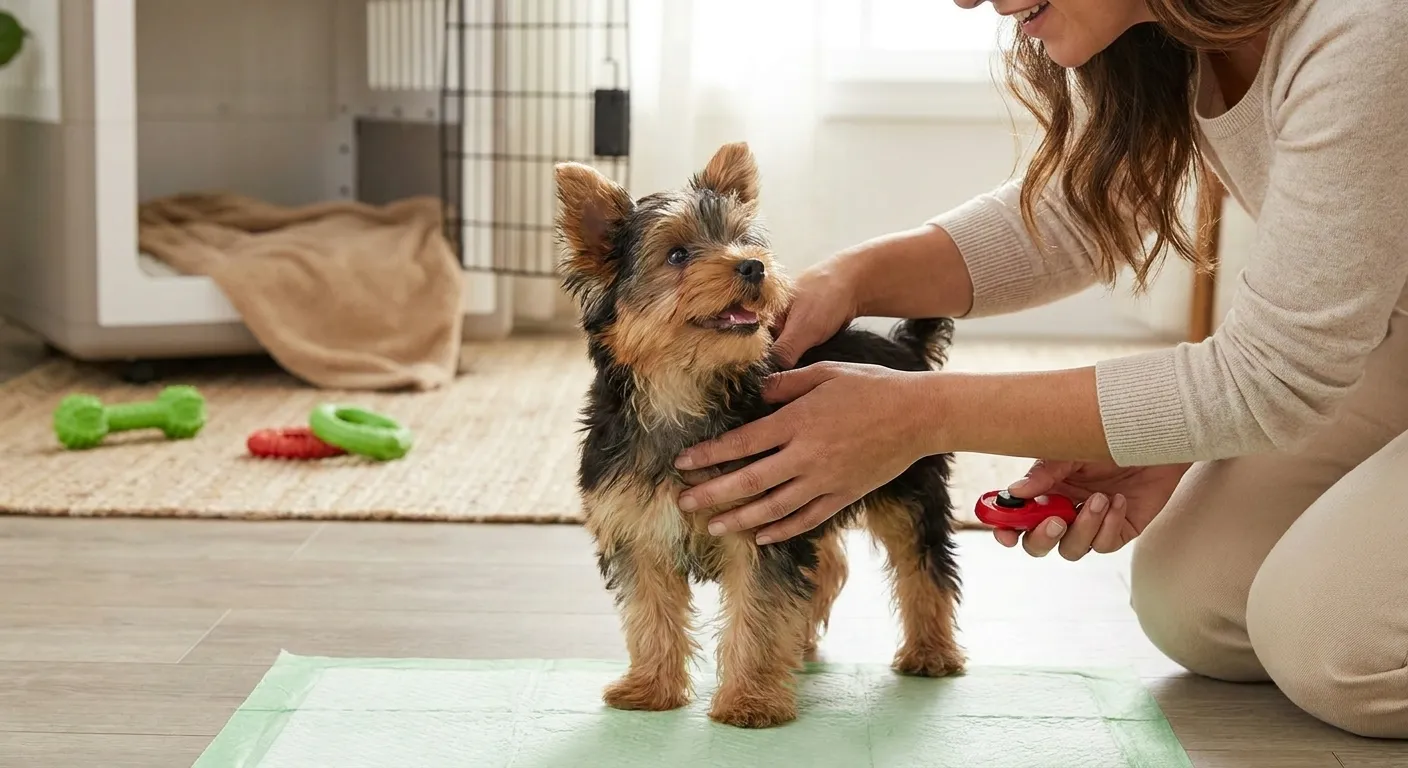
Crate training is one of the most effective tools for house-training a Yorkie. Dogs naturally avoid soiling their sleeping area. A properly sized crate (just enough room to stand up, turn around, and lie down comfortably) will encourage your Yorkie to hold their bladder. Never use the crate as punishment. When you can’t actively supervise your puppy, the crate is the safest place for them to be.
2. Choose a Designated Potty Spot
Select a specific area outdoors (or indoors if you’re using pee pads) for your Yorkie to do their business. Always take them to this exact spot. The familiarity of the scent and location will help them associate that area with potty time. Keep the area clean to encourage them to use it.
3. Immediate Rewards and Praise
When your Yorkie successfully eliminates in the designated spot, praise them enthusiastically and offer a high-value treat immediately. The timing of the reward is crucial – it must happen within seconds of them finishing to create a clear association between the action and the positive reinforcement. Avoid scolding for accidents; simply clean them up thoroughly without fanfare.
4. Leash Training for Potty Breaks
Even in a fenced yard, it’s beneficial to take your Yorkie out on a leash for potty breaks. This teaches them that potty time is a specific activity, not just general playtime. Furthermore, it prepares them for going potty in other environments, such as during walks or when visiting new places. This strategy helps reinforce the routine.
5. Supervise and Interrupt Accidents
Constant supervision is key, especially during the initial stages of house-training. Keep your Yorkie close to you, perhaps on a short leash indoors, so you can observe their behavior. Look for signs they need to go, such as sniffing around, circling, or whining. If you catch your Yorkie in the act of having an accident indoors, interrupt them with a quick clap or a firm
Related reading: